
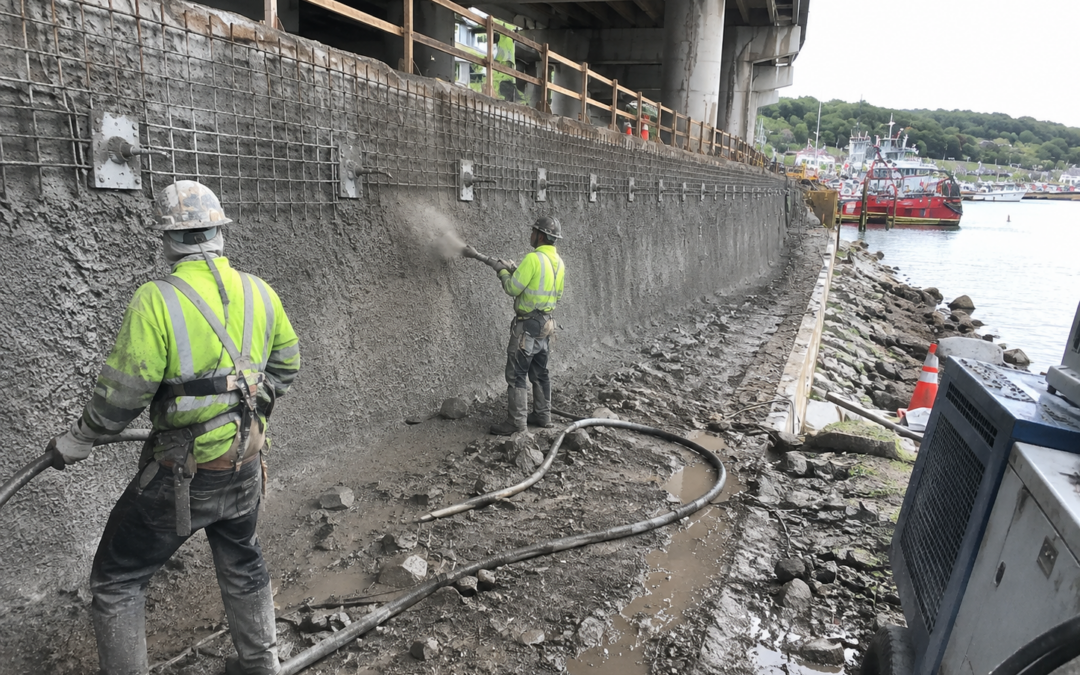
Seawalls protect waterfront properties, infrastructure, and shorelines from erosion, storm damage, and constant exposure to moving water. Whether supporting commercial developments, marinas, municipalities, or industrial facilities, these structures face some of the harshest environmental conditions possible.
Over time, even well-built seawalls begin to deteriorate. The challenge for property owners and engineers is determining whether repairs can restore the structure or if a complete replacement is the smarter long-term investment.
The answer depends on the extent of the damage, the condition of the underlying foundation, and the intended lifespan of the asset moving forward.
Key Summary
Seawall repair is often the right solution when deterioration is localized and the overall structure remains sound. Common issues such as concrete spalling, minor cracking, exposed reinforcement, and drainage problems can frequently be addressed through professional seawall repair services, including structural rehabilitation and shotcrete applications. Complete replacement becomes necessary when widespread structural failure, foundation movement, or severe corrosion compromise the integrity of the wall.
What Causes Seawalls to Fail?
Seawalls are constantly subjected to environmental forces that gradually weaken concrete and reinforcement systems over time.
Saltwater Exposure
Salt accelerates corrosion within reinforcing steel, causing expansion that leads to cracking and concrete deterioration.
Freeze-Thaw Cycles
In New England, water infiltration combined with freezing temperatures places additional stress on concrete structures year after year.
Wave Action
Continuous impact from waves gradually erodes protective surfaces and increases wear on structural elements.
Soil Erosion
Loss of supporting soils behind or beneath a seawall can create voids, settlement, and structural instability.
Poor Drainage
Hydrostatic pressure building behind a seawall can significantly increase loading conditions and accelerate failure.
Warning Signs Your Seawall Needs Repair
Identifying issues early can dramatically reduce repair costs and extend the service life of waterfront infrastructure.
Cracking
Surface cracks may indicate normal aging, but large or expanding cracks often point to structural concerns.
Concrete Spalling
Flaking, chipping, or missing sections of concrete should never be ignored. Property owners experiencing these issues should understand the causes and solutions outlined in our guide to concrete spalling repair.
Exposed Reinforcement
Visible steel bars are a sign that deterioration has progressed beyond cosmetic damage and requires professional attention.
Leaning or Settlement
Movement within the structure often indicates erosion, foundation problems, or excessive loading conditions.
Sinkholes or Voids
Depressions behind the seawall may signal that supporting soils are being washed away over time.
When Seawall Repair Makes Sense
Many seawalls can be successfully repaired without complete reconstruction.
Repair is often appropriate when the foundation remains stable, deterioration is localized, reinforcement damage is manageable, and the wall continues to meet operational requirements.
Addressing issues early through professional seawall repair solutions frequently allows owners to avoid the significant costs and disruptions associated with total replacement.
The Role of Shotcrete in Seawall Restoration
Many modern seawall repair projects rely on shotcrete applications to restore structural performance while minimizing demolition.
Unlike traditional cast-in-place methods, shotcrete is pneumatically applied at high velocity, creating exceptional bond strength with prepared surfaces.
Shotcrete can be used to restore deteriorated concrete surfaces, increase wall thickness, encapsulate reinforcement, improve structural capacity, and extend the lifespan of aging marine infrastructure.
For waterfront projects where access is difficult and downtime must be minimized, shotcrete often provides a faster and more efficient rehabilitation solution.
When Replacement Is the Better Option
While repair methods continue to evolve, certain situations still require complete replacement.
Replacement may be necessary when structural failure is widespread, foundation conditions have changed, corrosion has become extensive, or operational requirements have evolved beyond what the existing structure can support.
Structural Failure Is Widespread
If large portions of the wall have failed or significant movement has occurred, rehabilitation may no longer be practical.
Foundation Conditions Have Changed
Erosion beneath the structure can compromise the wall’s ability to perform safely, regardless of surface repairs.
Corrosion Has Become Extensive
Severe reinforcement deterioration throughout the wall may make restoration more expensive than replacement.
Operational Requirements Have Evolved
Changes in waterfront usage, environmental regulations, or loading conditions may justify building an entirely new system.
Repair vs Replacement: Cost Considerations
Repair projects generally involve lower upfront costs, shorter schedules, and less disruption to surrounding operations.
However, the most affordable option is not always the best long-term investment.
Decision-makers should evaluate the remaining service life of the structure, future maintenance requirements, and the underlying causes of deterioration before selecting a solution.
Professional assessments provide valuable insight into whether restoration or reconstruction offers the greatest value over time.
Concrete Pumping and Volumetric Concrete for Marine Projects
Marine environments often present logistical challenges that require specialized equipment and flexible material delivery methods.
Using concrete pumping services allows contractors to place materials efficiently in hard-to-reach waterfront locations while minimizing manual handling.
Similarly, volumetric concrete services provide on-site batching capabilities that reduce waste and allow crews to adapt to changing project conditions.
Choosing the Right Seawall Contractor
Marine infrastructure repairs require specialized expertise that extends beyond traditional concrete construction.
Contractors should understand structural rehabilitation, moisture management, reinforcement systems, shotcrete applications, and long-term durability requirements in aggressive environments.
Whether addressing localized deterioration or evaluating complete reconstruction, working with an experienced team that specializes in seawall repair helps ensure long-term performance and structural reliability.
At SSG Shotcrete, integrated capabilities in shotcrete, concrete pumping, and structural rehabilitation support complex infrastructure projects throughout New England.
Frequently Asked Questions
Can a seawall be repaired instead of replaced?
Yes. Many seawalls can be successfully repaired if deterioration is localized and the overall structure remains stable.
How long does a concrete seawall last?
The lifespan depends on construction quality, environmental exposure, maintenance practices, and material selection. Proper maintenance and timely repairs can significantly extend service life.
What causes concrete seawalls to fail?
Common causes include saltwater exposure, reinforcement corrosion, freeze-thaw cycles, erosion, poor drainage, and continuous wave action.
Is concrete spalling common in seawalls?
Yes. Spalling is one of the most frequent forms of deterioration in marine concrete structures due to moisture intrusion and corrosion.
Can shotcrete be used for seawall repair?
Absolutely. Shotcrete is widely used in seawall repair projects because it provides strong adhesion, minimizes demolition requirements, and performs well in complex marine environments.